Wednesday, September 23, 2009

Michael Gonzales on Bobby

I had to give this piece on Bobby by Michael Gonzales a nod. Look for him in the Best African-American Essays 2010. Bravo!


What About Bobby?

by Michael Gonzales

http://blogs.tampabay.com/juice/images/2008/04/03/tbdwhitneyhoustonbrown040408.jpg


With Whitney Houston’s comeback disc I Look to You zooming to the top of the charts, the former “crack is wack” poster child has been making the media rounds. From her star-studded preview party at the Beverly Hilton to the highly anticipated interview with Oprah, the former pop princess turned coke queen has been playing the redemption card to the hilt. She has spared no detail, laying bare the most painful moments of her struggles with drug addiction and her turbulent marriage.

Still, through it all, her ex-husband Bobby Brown has been strangely quiet. Although somewhere in the world, Brown might be threatening to toss a TV from the window while calling somebody a bitch, I truly thought we might hear a little rah-rah from the original Bad Boy of R&B. Indeed, since his own fall from soul-man grace, scandal has been never been a stranger to Bobby.

“Bobby Brown was not able to sustain his career, because he did not duck scandal, he invited it,” says journalist Barry Michael Cooper, who coined the term “new jack swing” in a 1988. “Scandal was both his badge of honor and his scarlet letter. Somewhere along the way, he could not differentiate between the two.”

The kid who sang sweet fluff like “Candy Girl” as a member of New Edition has since joined the soulful legion of wildboys that includes Ike Turner, Arthur Lee, Sly Stone, David Ruffin and Marvin Gaye. And since he hasn’t released any new music since 1997, it’s easy to forget that Bobby Brown was once the man in the land of soul.

Although I never agreed with those who called him “The King of R&B,” there is no denying the influence of his seven-times-platinum album Don’t Be Cruel—not to mention the videos, the live shows, and persona he held over the public from the day of its release on June 20, 1988. Without a doubt, we can see a little bit of Bobby Brown in Chris Brown, Usher and even Britney Spears, who remade “My Prerogative” in 2004.

“From the beginning of his career, Bobby always wanted to be the center of attention,” remembers Steve Manning, the first publicist/conceptualist for the legendary Boston boy band New Edition. One glance at the photo with the 12-year-old wearing a bright red jacket as he stares boldly into the camera, made it clear that that Brown was not shy. “Bobby knew he had talent and he wanted everybody else to know it too.”

Though Bobby was young, the fiery Aquarius born on February 5, 1969, was a wild child. “I can remember meeting his mom and family, and they all had a street swagger,” Manning continues. “But Bobby was also very driven; he was destined to be a star.”

for the rest of this story, go to:

http://soulsummer.com/what-about-bobby

Sunday, September 20, 2009

ALBUM COVERS from the Frederick Douglass Academy student designers

My music class at Fredrick Douglass Academy in Brooklyn took their favorite songs and designed their own album covers. These joints look professional. They look like you could see them at Virgin Megastore or Best Buy. Bravo for the creativity, young'ns!


Ghostface's New Comic Book

...and I reviewed it just to get an advance copy. Plus when I was reading it, my heart was going ba-bump, ba bump. Boy what a storyline, what illustrations! Here's my take on it fresh from allhiphop.com

The image “https://blogger.googleusercontent.com/img/b/R29vZ2xl/AVvXsEi4mM5J1rW7b3KpiOAfXuAKb0rLVTY8lmlYBHwy27pVaTueKUuq9o62u1yBQFZWCoCVM1MsrRpx0hV667TLTQrEP2zFBe39Vn1xdRD87AxaLAhx4IVA-LKy48RQ62QBYr4X60BpUxhlQRQ5/s400/ghost1.jpg” cannot be displayed, because it contains errors.


By Sidik Fofana
Cell Block Z
Ghosface Killah with Chris Walker – Shauna Garr – Marlon Chapman

It just seems natural. These Shaolin students over in Staten Island have always been obsessed with the martial arts and the kicks and throws of Eastern combat training. Meth broke the ice with Method Man plowing new frontiers in the field of Hip-Hop graphic novels. Now it’s Ghost’s turn to play disciple with Cell Block Z, a fist-pumping comic book assisted by illustrator, Chris Walker (Marvel Comics, Virgin Records, Bad Boy Entertainment) and screenwriters, Shauna Garr and Marlon Chapman.
Cell Block Z tells the story of Cole Dennis (which also happens to be Ghostface’s government reversed), a heavyweight contender falsely imprisoned for armed robbery and murder. After a prison official discovers his fighting background, Cole Dennis is convinced to train with the hopes that a few match victories will grant him entrance into Cell Block Z, a more comfortable detention unit. The black and white illustrations may not give the novel the classic look it’s intending, but they do give it an artsy sketchbook quality. Meanwhile, Carr and Chapman equip the book’s storyline with the necessary hidden plots and faithfully reveal a conspiracy behind Cell Block Z, a conspiracy that Cole Dennis and, his main advocate, Officer Johnston spend the rest of graphic novel trying to unravel.
Surprisingly enough, besides the actual style of fighting, Cell Block Z is a not a martial arts comic. Instead of the ancient texts, senseis, and codes of discipline that one would expect from Shaolin students, the book relies more on brute hand-to-hand combat. In this regard, Cell Block Z is more like Fight Club with the prisoners forming an underground battle zone of sorts. Then again, Cole Dennis , who later becomes Ghostface Killah, does direct his rage toward his own imprisonment, an abstract, more honorable opponent compatible to the martial arts philosophy. In a place where his peers are pummeling each other just for the sheer destruction, Ghostface Killah, in an eastern sense, emerges as a hero.
If not for entertainment value, Cell Block Z, like the Jackson Five cartoon show on ABC or the Beatles’ Yellow Submarine Lunchbox is a valuable relic. It serves as another product in the era of Wu supremacy and swiftly takes advantage of a untapped outlet.

REVIEW: Braille & Symbolyc One, Cloud Nineteen

Let it be known Braille got skills on the m-i-c. So I was glad to listen to his new joint and review for Okayplayer and whoop, there it is...


Braille & Symbolyc One

Cloud Nineteen
(Hiphop Is Music : 2009)


Braille is traveling unchartered territory. As far as Gospel rappers are concerned, who’s really paving the way? The closest person that comes to mind is Christopher Martin also known as “Play” from Kid ‘N Play and he only further proves the aforementioned concern. So, considering the odds of Christian rap replacing Southern rap as Hip-Hop’s go-to subgenre, there is a warm authenticity, Cloud Nineteen, Braille’s collaboration album with Symbolyc One, the producing third of Strange Fruit Project. It’s the classic underground story of a true-to-craft MC who bumps paths with a like-minded producer and creates a notable offering to the genre he has so diligently studied.

Cloud Nineteen begs to be spared from labels. Most of time, a rapper says, “God” only to watch the “Christian rapper” banners sway with more vigor, but Cloud Nineteen’s diverse lyrical content is not so easily encapsulated. Whereas most religious music leans on excessive praise and boils in its own self-righteous juices, Braille prefers to let his underground roots do the talking. Thus a song like “Broken Heart,” a tribute to his deceased father is rendered with an MC’s eloquence rather than a preacher’s logic. Similarly, listeners may find themselves listening more for Braille’s flow than his religious indictments. After all, it’s definitely flow that makes a track like “Skepticold” bump with oratorical rhythm. S-1’s stripped down but funky accompaniment does not impede as Braille spits: “The environment is violent/Leviathan is like a silent assassin/When the iron spits/And I admit,” effortlessly weaving together assonance and complex rhyming.

As the soundman, S-1 plays an unsung part in weaving together the album’s divergent threads. Whether it’s religion, lyrical virtuosity, or just plain old braggadocio, S-1’s mellow melodies keeps the patchwork quilted. On “Found Her,” S-1’s sentimental production boosts Braille’s love ruminations. As he rattles on in ambiguity about “her”—it could be “her,” his current wife or a Hip-Hop “H.E.R.” discovered by Common fifteen years—S-1 plops the fitting chorus of a filtered female voice to add emphasis.

It’s tough to say whether good production should dominate or facilitate, and though S-1 lands on the latter half of that debate, the jury is still out on whether he deserves a slap on the wrist or a pat on the shoulder. As for Braille, his secular flows and religious leanings share one thing in common: they’re both preaching. He admits it himself in “From The Pulpit,” “The rapper is a preacher man/ Every rapper got something that they’re preaching through the speakers, man/ They’re like public speakers with the chance to reach the younger generation better than the teachers can.” This type of preaching ain’t so bad.

-Sidik Fofana

Wednesday, September 16, 2009

Wait Now, Don't Forget Sharon Jones...

The image “http://blogs.villagevoice.com/music/images/sharonjones_collage.jpg” cannot be displayed, because it contains errors.
Came across Sharon Jones on some random shit last Sunday when I was watching the HBO television series, Hung, and her song "How Will Long Do I Wait For You" was playing on the credit. Homegirl is on that classic soul tip and is just an absolute hummingbird on the mic. Listen to this song below and it will take you to another place, I pinky swear. Just press play below and let the soul genies swoon all over you...

"How Long Do I Have to Wait for You" by Sharon Jones


Brooklyn Book Festival

Just like the annual back-to-school Staples sale and the Labor Day Parade, the Brooklyn Book Festival ushers in the fall with tradition. This year, over 220 authors gathered on a picture perfect Sunday to celebrate literacy in Downtown Brooklyn’s Borough Hall area. Black literature was very well represented as Harlem Writer’s Guild, Mosaic Magazine, among other book and literary magazine publishers for writer’s of color shared tent space with over 150 vendors.

Those who were seeking intimate panel discussions with renown authors also got their fill. Edwidge Danticat, author of the critically acclaimed memoir, Brother I’m Dying, participated in a conversation about the role of social history and culture in her works. Melvin Van Peebles drew in a packed auditorium at St. Francis College in conjunction with his new comic book, Confessions of a Ex-Doofus-ItchyFooted Mutha. Pamela Newkirk (Letters From Black America) spoke on the importance of the independent media voice while Staceyann Chin, Cornelius Eady, and other lent their poetic lenses in the “Why Poetry Now” forum.

Nelson George, author of the memoir, City Kid, was a notably absence from the day’s festivities. The writer and film producer skipped out on a panel discussion on urban life with authors, Alyssa Katz and Tom Vanderbilt, at festival’s main stage.

All in all, it was another complete occasion as people all ages convened for the love of reading. The festival went on for eight hours 10 am – 6 pm and Brooklyn put a fine seal on its fourth anniversary.

Sunday, September 13, 2009

I Found This To Be Disturbing...

This is what comes up in Google if you auto search the phrase "why are black people". Is this what America thinks of us?


Wednesday, September 9, 2009

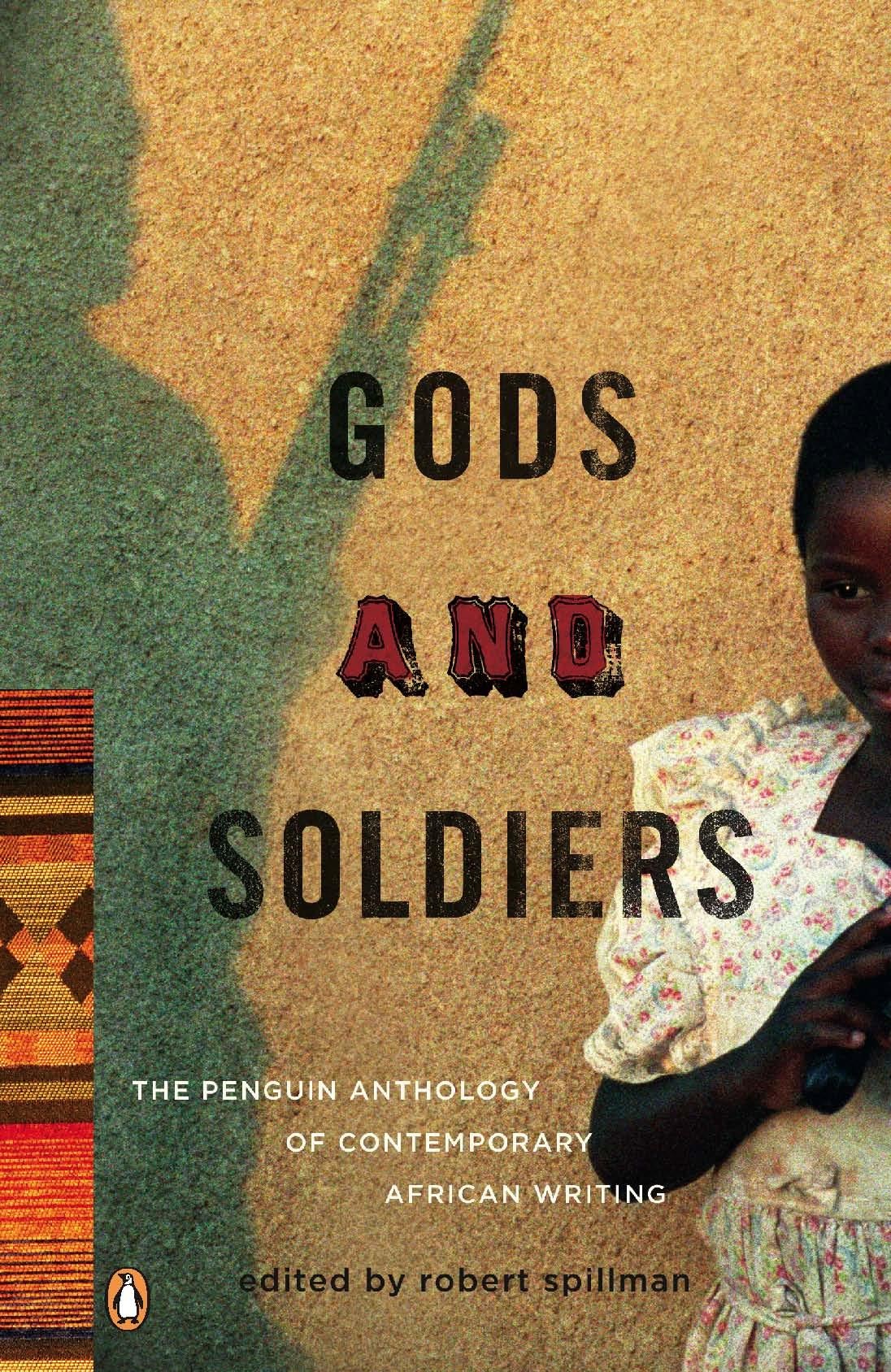
Gods and Soldiers Book Review

From seeingblack.com.

http://betsylerner.files.wordpress.com/2009/05/gods-and-soldiers-cover.jpg

The Many Shades of Africa
By Sidik Fofana—SeeingBlack.com Literature Editor
Sep 8, 2009, 13:23


With Gods and Soldiers, Rob Spillman compiles a unifying anthology of African writing. Whereas the literary feat of the day has been to corral essays and stories from

Africa and identify their intertwining aesthetic, the literary disservice has been the inability to individualize diverse regions within the continent itself. To put it simply, we know what makes Africa, Africa, but what makes Sierra Leone, Sierra Leone and Zaire, Zaire? Rob Spillman, in this collection, offers those distinctions, presenting the magical realist propensities of the Portuguese countries alongside the anti-assimilation attitudes of the francophone nations, the post-apartheid exhalation of South Africa and other regional predilections.

With a palette of authors that range from Nobel Prize winners to writers just coming of age on the literary magazine circuit, Gods and Soldiers doesn’t aim for regional consistency. However intentionally or unintentionally, the majority of the selections in the anthology share the common thread of political unrest and a voice raised against colonial authority. Chinua Achebe’s essay, “The African and the English Language,” may seem like it contradicts this theme in urging African writers to write in their colonial language, but Achebe clarifies that his position supports audience and not necessarily patriotism. “...On the whole it [colonialism] brings together many peoples that had hitherto gone their several ways. And it gave them a language with which to talk to one another,” he writes. “If it failed to give them a song, it at least gave them a tongue.”

Representing South Africa, Nadine Gordimer’s short story, “A Beneficiary,” tells the story of a young woman who finds out that her real father is a famous stage actor. It’s one of a few selections in the book that does not possess a regional trait with Gordimer’s mastery of plot development transcending her South African identity.

A storylike Mohammed Naseehu Ali’s “The Manhood Test,” however, sounds distinctly West African with its cynical commentary on sketchy marriages. The tale, about a married man whose wife wants to publicly prove her husband’s impotence, is similar to many contemporary African comedic films that satirize relationships. The absurdity of the main character’s plight drips with his melodramatic pleas, “And to those who doubt my manliness ya Allah…prove to them that all power comes from You. Equip me with the strength to perform this test, to which I am maliciously being subjected!”

Gods and Soldiers is by no means a canon of staple African writers. It includes those with a steady literary presence, such as Chimamanda Achidie and Jose Andalusa, who are also still in the position to define their respective regional tastes. If anything, the anthology shows that Africa may be too big to compartmentalize although it’s not too scattered to hold certain trends. Documenting local trends, however, may be very well be the best way to reveal the complex portrait of earth’s second largest continent.

David Thompson to Present Michael Jordan at the Hall of the Fame Ceremony

For the basketball aficionados out there, David Thompson is often referred to as Michael Jordan before Michael Jordan. The former NC State Wolfpack player and Denver Nugget had a 48 vertical leap back in the day, which is still a remarkable vital stat. If you watch old highlights, he's out there doing facials, Lebronesque dunks. As a matter of fact, speaking of watching, look below...


Insane Dunk

The folks over at the House of Hoops are known for doing these inhumane dunks every once and in a while. Watch this one and nope, it wasn't photoshopped...


Sunday, September 6, 2009

Beatles Rockband!

http://www.beefjack.com/wp-content/uploads/2009/04/beatles-rock-band.jpg

...drops on September 9th and it's a must cop. Me and the boys will definitely be in line on the weekend of to get in our fix. The limited edition--which includes custom Beatles drums, a mic stand, and guitar--is going for $249.99. I know what you're thinking...who is this 26 year old game freak?! Relax, partners, even the New York Times is excited...

http://www.nytimes.com/2009/08/16/magazine/16beatles-t.html

Hot Jay-Z Commercial

Classic Jay-Z album covers in vicarious form...


More Michael Moore

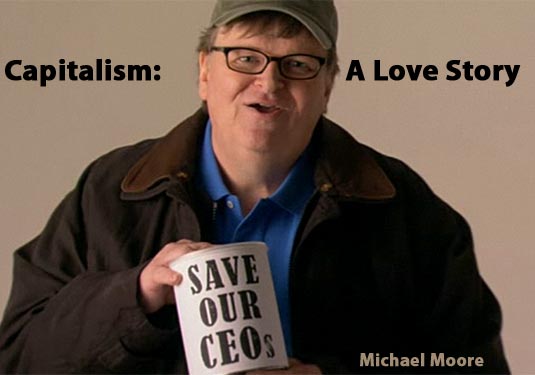
This guy is a renegade. He is singlehandedly backslapping conservative America. His new documentary, Capitalism: A Love Story, delves into the financial crisis that has plagued America for the past two years. Like Bowling for Columbine, Farenheit 911, and Sicko, it's a must see.

The image “http://www.filmofilia.com/wp-content/uploads/2009/07/michael-moore.jpg” cannot be displayed, because it contains errors.


If you don't believe me, take a look at this clip from a documentary Moore did shortly after Amadou Diallo was brutally killed when police "mistook" his wallet for a gun.


Wednesday, September 2, 2009

20 Greatest Basketball Rhymes of All Time

http://c2.api.ning.com/files/vLCJszJjDIhkIzggi6aMbfRPtPdfCVzxApXn5uncIHc_/nikebasketball07.jpg

20 Greatest Basketball Rhymes of All Time
by Sidik Fofana

Forget what flings Hip-Hop has had with big booty girls, bling, or gang violence. When it comes to basketball, it has always shown its more delicate side. In any give court, arena, or garden, Hip-Hop provides the soundtrack to our fizzing enamoration with roundball culture. From Run DMC to Jay-Z, basketball has been Hip-Hop's sweetheart. It has embraced it. It has cherished it. It was serenaded it. So, without further a do, these are Bounce Magazine's 20 Greatest Basketball Rhymes of All Time. Enjoy.


20. "We drive bulletproof Coupes nigga, go on take your shot/ We used to shoot hoops nigga, now we shoot up blocks"
--Young Buck "Angels Around Me" (2004)

Apparently, Young Buck is 6'0 and can reverse yoke. Ironically, no one has witnessed him shoot up blocks, though.

19. "I tried to say sorry. She said, "Say sorry for Taquisha"/ Chairs come flying my way like balls at basketball practice"
--Fugees "Living Like There Ain't No Tomorrow" (1994)

Two years before their multi-platinum class The Score, the Fugees scored with this hoop simile.

18. "Do you want me to shoot it (NO)/ Do you want me to pass it (NO)/ Do you want me to dunk it (YES)"
--Shaquille O'Neal "Shoot Pass Slam" (1993)

This rhyme may be a bit too tongue and cheek to be on a greatest rhyme list, but it's hard not a believe with four NBA titles under his belt.

17. "Y'all think I'm stupid cuz I shoots 'em up like cupid/ And if you gave me a basketball, I'll show you how to shoot it"
--Andre, Outkast "D.E.E.P." (1994)

If this ATLien could the shoot the rock all this time, how come he didn't share his knowledge with the Hawks?

16. "Coach sat me down from the ball team/ 'Cause I was breakin niggaz on the inseams" --Phife Dawg, A Tribe Called Quest "8 Million Stories" (1993)

Could Phife really ball or was this just the 8th million story?

15. "I used to shoot hoops/ But now I, make, hits, every single day"
--Snoop Dogg "Tha Shiznit" (1993)

At a nimble 6'3, Snoop could have had an advantage at the two. He just could not be caught wearing a red jersey.

14. "Pretty final/ '92 played the city finals Pretty swift, real mvp/ and 55th I can hoop, yo/ All-American in my age group, yo"
--Cam'ron "Sports Drugs & Entertainment" (2000)

We're surprised that Cam doesn't boast more about his ball playing legends on wax. Cam was indeed an All-American high school baller who was offer scholarships to North Carolina, Syracuse, Duke, Florida and Southern California but grades kept him attending a Division I program.

13. "'Cause when it comes to playing basketball/ I'm always last to be picked And in some cases never picked at all"
--Skee-lo "I Wish" (1995)

Though "I Wish" was Skee-lo's only hit, it was not picked last on this particular list.

12. "Sold ya nigga, thought I told ya nigga/ Crossover, slam dunk, game over nigga"
--LL Cool J "The Ripper Strikes Back" (1998)

How better to respond to Canibus's boxing metaphor "2nd Round Knockout" with a very definitive basketball one.

11. "We drinkin quarts on courts so how you handle it/ Shootin bricks or sellin bricks, we still scramblin'/ With offense and defense/ I use the bassline to score points frequent"
--Timbo King, Wu All Stars "Soul in the Hole" (1997)

How many members of the Wu family are there? I bet they could run their own inner clique summer league.

10. "We use to hoop in my yard but now I dribble the rhyme/ It's like rain drops couldn't make our game stop..."
--Common "Nuthin' To Do" (1994)

Common was pretty fiesty at ball in his day. He has good genes being the son of Lonnie Lynn, former ABA player.

9. "I'm the crowd favorite and I believe the fans/ Love the way I finger roll it with either hand/ My handles pull it through presses/ Plus I can play the lane and block shots like bulletproof vestes"
--Fabolous "It's In The Game" (2003)

Real talk, don't Fabolous look my dude, Skywalker from City Slam?

8. "Nothing left for us but hoop dreams and hood tournaments/ Thug coaches with subs sittin on the bench; either that or rap"
--Nas "We Will Survive" (1999)

It's the reign of the thug coach like Tupac in Above the Rim. Nas hits this one on the head with this rhyme about these ghetto Pat Rileys.

7. "Yeah I got on sneaks but I need a new pair/ 'Cause basketball courts in the summer got girls there"
--Fresh Prince "Summertime" (1991)

This a great lyric about the original single's bar. You might meet your next ex-wife, son, just go to the bleachers.

6. "I've seen hoop dreams deflate like a true fiend's weight"
--Jay-Z "Izzo (H.O.V.A)" (2001)

We pray that every boy who grabs a ball becomes Julius Erving, but Hov is right. Not everyone gets a visit from the parquet genie.

5. "The young boss of the cross for four quarters/ And from three point land, he's all water/ Matter fact, call him the king/ The way he breaks down the defense Its like he got the ball on a string"
--Jadakiss, "Reebok Allen Iverson Commercial" (2002)

This televised rhyme that Jada delivered is almost ill as Iverson's crossover.

4. "Not even Pee Wee Kirkland could imagine this/ My team didn't have to play to win the championship"
--Fat Joe "Lean Back" (2004)

Touche. I'm glad you brought this point up, Joe. Who is going to beat the Terror Squad this year?

3. "Get me on the court and I'm trouble/ Last week fucked around and got a triple double"
--Ice Cube "It Was a Good Day" (1992)

Judging by a couple of celebrity ball game appearances, we'll just be nice and say this rhyme was a great metaphor.

2. "Because the streets is a short stop/ Either you're slingin crack rock or you got a wicked jumpshot"
--Notorius B.I.G. "Things Done Change" (1994)

It's the age old hood ultimatum. Either you're sitting at the block or playing at the Square.

1. "Basketball is my favorite sport/ I like the way they dribble up and down the court/ Just like I'm the King on the microphone/ so is Dr. J and Moses Malone/ I like Slam-dunks, take me to the hoop/ My favorite play is the alley-oop"
--Kurtis Blow "Basketball" (1984)

This here is the pioneer of all basketball rhymes. Many have tried to duplicate. Bow Wow had his try and even Penny Hardaway and Chris Rock used the song in a commercial. None have captured the significance and after 20 something odd years, Hip-Hop and basketball is still happily married.