Get at him, Barack!

Showing posts with label Barack Obama. Show all posts
Showing posts with label Barack Obama. Show all posts
Monday, May 2, 2011


Wednesday, February 2, 2011
Egypt Editorial
Interesting piece from the Boston Globe...
There is no shortage of veteran diplomats and others who have contacts among the various Egyptian opposition figures and groups. The Obama administration needs to engage with them all — including the Muslim Brotherhood. One consequence of Mubarak’s silencing of nearly all political opponents is that their precise values and aims are not widely understood. Without judging the groups itself, the United States can help identify the new players in Egyptian politics and what they want.
America will not be able to determine the outcome of the current upheaval in Egypt — nor should it try. But the administration retains influence with senior military figures in Egypt who are likely to be making the key decisions about a political transition. Obama could win a modicum of trust from the new players in Egyptian politics if he can persuade the military leaders who are currently in power to immediately implement reasonable demands for reform coming from the opposition.
Obama should be ready to back two demands in particular for constitutional changes. One would eliminate the requirement that presidential candidates be members of the council of parties deemed legal by the Mubarak government. This article of the constitution prohibits both Muslim Brotherhood members and the military brass from running. The other key revision would be removal of the article that allows a president to run for an unlimited number of terms.
It will not be easy to overcome Egyptians’ mistrust of Washington for having turned a blind eye for so long to Mubarak’s police-state repression, but Americans, Egyptians, and their neighbors all stand to benefit if Obama makes that effort.
Obama should take steps now to help speed Egypt’s transition
PRESIDENT OBAMA delivered the right message Tuesday evening when he stressed that only the Egyptian people can choose their leaders, but also said he had just told President Hosni Mubarak that “an orderly transition must be meaningful, it must be peaceful, and it must begin now.’’ Since Mubarak had just told Egyptians he intended to remain in office until presidential elections are held in September, Obama’s statement was a pointed rejection of Mubarak’s stubborn stand — and a gesture of support for Egyptians who have taken to the streets to demand an end to Mubarak’s regime.
Especially after yesterday’s attacks by pro-regime forces against protesters, Washington can no longer ignore the contradiction between its longstanding partnership with Mubarak and Obama’s pledge to “stand up for democracy and the universal rights that all human beings deserve, in Egypt and around the world.’’ To show he means what he says, Obama should appoint a special envoy — or perhaps a few — to open up channels of communication with the disparate groups and factions in the Egyptian opposition.
There is no shortage of veteran diplomats and others who have contacts among the various Egyptian opposition figures and groups. The Obama administration needs to engage with them all — including the Muslim Brotherhood. One consequence of Mubarak’s silencing of nearly all political opponents is that their precise values and aims are not widely understood. Without judging the groups itself, the United States can help identify the new players in Egyptian politics and what they want.
America will not be able to determine the outcome of the current upheaval in Egypt — nor should it try. But the administration retains influence with senior military figures in Egypt who are likely to be making the key decisions about a political transition. Obama could win a modicum of trust from the new players in Egyptian politics if he can persuade the military leaders who are currently in power to immediately implement reasonable demands for reform coming from the opposition.
Obama should be ready to back two demands in particular for constitutional changes. One would eliminate the requirement that presidential candidates be members of the council of parties deemed legal by the Mubarak government. This article of the constitution prohibits both Muslim Brotherhood members and the military brass from running. The other key revision would be removal of the article that allows a president to run for an unlimited number of terms.
It will not be easy to overcome Egyptians’ mistrust of Washington for having turned a blind eye for so long to Mubarak’s police-state repression, but Americans, Egyptians, and their neighbors all stand to benefit if Obama makes that effort.
Sunday, September 5, 2010
Five Reasons Barack Got out of Iraq

5) Saddam Houssein is dead.
The US severed the main source of Iraqi despotism. Threat slightly averted.
4) We were losing.
Iraqis don't like democracy and they certainly don't like our oil interests and fake quests to find weapons of mass destruction. So, they did the logical thing. They resisted.
3) He promised us in 2008.
He gave us his word that he would withdraw troops within 16 months of taking office. He was three months late, but he didn't come up empty.
2) He won the Nobel PEACE Prize.
That would have been awfully hypocritical, wouldn't it? To not only break a promise, but to do so by continuing to wage war.
1) It takes attention off the other war.
Oh, you guys in the White House thought we forgot about the Afghans, huh?
Wednesday, August 11, 2010
Nas's Nigger Tape and the Obama Complex
An old essay that I never got a chance to publish.


Nas’s Nigger Tape and the Obama Complex
By Sidik Fofana
We now know white people own the word “nigger” and that it costs $84 million. When Nas announced the release of his tenth studio album, we had a strong feeling that the controversial title would never live to its first breath of shelf life. Somehow we just knew that the same investors and corporate executives who love to hear the word “nigger” in song titles and all over wax, don’t want to see the word in headlines. So as we predicted, like jaded magicians, they stepped into that magical illusion of freedom speech, and snatched the most unalienable right from one of the greatest linguists of our time.
Yep, the same rhymesayer who once had the power to catch government phone taps, was put on timeout and for making a “foolish decision for publicity. Mayor Thomas Napoli threaten to withdraw $84 million dollars in investments. That’s where the figure comes from, and now that I think about it, we, the people who are darker
But even though corporate America has devoured every opportunity for profit, there’s own thing it has failed to own: the underground. We’ve seen movements spiral to the mainstream only to be snatched by the invisible hand of capitalist America. Intifada flags, sacrosanct symbols of the Palestinian struggle in Israel were stripped and commoditized into trendy H&M scarves, wore by youth all over of America, some of whom even couldn’t point to the word Jerusalem in a holy text. Streetball players have been plucked from the tars of the Rucker Park and West Fourth Street, and burned on to high definition DVD’s for the home entertainment centers of white boys from Frankfurt to French Lick. Hip-hop has gone from cardboard, linoleum and Bronx grass to the glass ceilings of Midtown Manhattan. But one thing was never stolen from the beginning and that was very bullhorn that expressed these movements in the first place .
That’s why there’s The Nigger Tape comes into play. As much as the doctor doom that is mainstream has plucked every burgeoning movement from the bosom of the very proletariat which created it, it has never been sophisticated enough to hear those movements’ first palpitations. In other words, DJ Green Lantern is Nas’s first amendment; all the words that get a censoring dash in the liner notes, blare out his speakers loud, seething….unadulterated.
The Nigger Tape is everything Untitled wasn’t allowed to be. In the mixtape,
That was the original intention for Nigger, conscious minstrelsy. If media
It’s kinda like the film Idiocracy, which is based on the premise that human society has only grown stupider with time. A restaurant’s title goes from Flood Ruckers goes to Mud Ruckers, to Blood Ruckers, to Butt Fuckers. The point is that society will transform from a subtle infusion of sex, violence, and drugs in their culture to downright blatant references.
It’s the same thing with Nas. Hip-Hop has gone from the Wild Style days of Double Trouble rocking the stage with toy Gatling guns, to the seven words you can’t say on wax, to pickets, misogyny, and now niggers and black dick.
So which one makes the grander statement Untitled or The Nigger Tape?
over the government and not the more romantic role of rogue lampoonist, righting
The definition of the Obama Complex is simple: anyone of color who feels
Untitled is Nas’s political platform.
In addition to blasting the disfigured prism of the n-word, Nas tackles
The Barack Obama complex is a blessing. All those rappers and athletes who swore up and down that they were not role models, who said they were only funhouse mirrors reflecting the angst of society. It’s telling them that leadership is cool.
Nas says that he is not upset that he had to change the title of his album
Nas has identified the exploitation. They fooled him once with “Oochie Wally”
Thursday, June 17, 2010
Congressmen Gone Wild
What happens when a college student in DC asks a congressmen if he supports the Obama agenda? Ummm...violence. Rep. Bob Etheridge (D-NC) is asked the question and goes apeshit and what do you know, the marvels of technology have allowed us to see it on film!
Sunday, April 4, 2010
Maxwell: Two Grammys, Two Cents

Maxwell: Two Grammys, Two Cents
Maxwell on Health Care
“I think everybody should at least have the knowledge that if they’re sick it’s not going to be bankruptcy or foreclosure. There’s no reason it should be like that in America. If somebody goes through something, we should be able to help them without the entire world falling apart. People should feel like if I get sick, if my child gets sick and I can’t afford it, my child doesn’t have to die. I don’t have to take out another mortgage or file for bankruptcy because I had to pay for an operation so my kid could live, my wife could live, I could live. It’s just barbaric to even think that should be normal. That’s why I’m a big supporter of health care reform.”
Maxwell on Iraq
“The war is a complicated onion when you look at all the situations regarding it. I know Barack Obama was talking about how he was gonna get a lot of people out of the war, but I think it’s safe to say that’s it’s way more complicated than just pulling out of Iraq right now. How are you gonna run through somebody’s crib, hold it down, lock it down, and then bounce, and then think that they’re not gonna try to come get you? It’s all messed up that oil has served as an impetus for so many of these interactions that have occurred over the years. I wish we could make a clean gas vehicle that runs on a whole new type of energy, so we wouldn’t even care about this.”

Maxwell on the Next Album
“I try to keep a lot of my [political] opinions on the under because I don’t want to inundate people who are just coming to me for music. But, I definitely care about what’s going on in the world. I think the next album will definitely take much more of a political stance. I think it’s time. I do a lot of charity work, but I really shy away from making it a part of the stage. I think it’s awesome when people promote things and lend their names to foundations and organizations. I don’t fault, judge, or assume that they’ve done anything less than virtuous in their interactions with them, but I have a tendency - I believe that the good you do is between you, God, and the person you’ve helped. It’s a delicate balance but I’m trying strike it on the next thing that comes out. We’ll see how it works.”Maxwell on the Earthquake
“You gotta understand a week before all this happened or even two days before all this happened, I was on cloud nine. The album hit big and with the support of the Grammys, I just couldn’t believe what a difference a year made. I was sitting on the brink of not knowing what would happen to suddenly having all of this success happening. Then, to see so many people going through something so terrible, I felt really torn and conflicted about how I should even feel about the good that was happening in my life. I saw so many people had lost their lives, had their lives shattered. The sheer chaos of it, the brutality of it, considering the history of Haiti and all that it has experienced.”
Maxwell on Relief Efforts
“Well, once it happened it was like what can I do. I was good friends with Jeffrey Wright who’s an amazing activist and has done great work in Sierra Leone trying to build homes and he got me involved with the Obama Administration, the Clinton Foundation, and a few key people at the White House. Early on before the tragedy, I had been involved with the Red campaign and trying to raise awareness and raise money through Red products. The proceeds from “Help Somebody,” one of the songs on my album go towards the red foundation and other proceeds are funneled through various organizations as well.”
“It was a great meeting that Clinton held in Harlem at his foundation because he’s the special deputy on the board of Haiti and there were a lot of people in the room talking about how to build homes and donate time and resources. I feel like I’m more of a student in these matters so I have a tendency to just keep my silence, take in everything around me, and then try to figure out what I can actually do. I know I could do my best through my work and the money that I raise from concert sales, tickets, albums, songs and publishing. I got to see who I could connect myself with and the people who really had the heart.”

Maxwell on the Tour with Jill Scott
“I mean that first album is a classic. It’s just a hands-down classic. She has such a power to what she does and what she sings about. She’s an incredible performer. I just wanted to celebrate her record in some way while I’m out doing what I’m doing. It seemed like the perfect fit. My manager, who’s a fan of her as well, went to see her way back in the day at the House of Blues when she was just starting out and she just had the audience in the palm of her hand with her vocal and story-telling ability. Her performance is sick and it just felt like if folks in general wanted to have a night out where you hear some soul music and get a musical fit that’s so rare these days out here now, it’s the show. If I wanna take my girl out, I could see this being the perfect show because you got Jill for the ladies and the guys and it just felt right.”
Maxwell on Rappers
“I’ve had the privilege of working with Nas and I think he’s pretty amazing and there’s so many people I like from Jay to Drake to Rakim and the list goes on. There’s a lot of people I would wanna do stuff with. I don’t just want it to be some moneymaking opportunity just because of audiences. I’d like it to be wow, okay, very unlikely that the two would pair and I would like it to make sense in terms of message and what the song’s doing. That’s what really makes things happen for me. It’s not the person really. It’s the purpose.”
-Sidik Fofana
Wednesday, March 24, 2010
The Bill in Layman's Terms
Still confused about what Obama's signature on the Health Care reform bill really means?

1) You can keep your current insurance or buy state run insurance starting 2014.
2) You get to pay less for drugs and preventative care.
3) Adults can stay on health insurance for three more years. Kids can stay on family insurance until they're 26 years old.
4) You can still be eligible for coverage even if you have a pre-existing condition.
5) You automatically qualify for certain types of insurance based on your income.
Today's Health Care Reform Lesson has been brought to you by the letters "Y", "E", and "S".
1) You can keep your current insurance or buy state run insurance starting 2014.
2) You get to pay less for drugs and preventative care.
3) Adults can stay on health insurance for three more years. Kids can stay on family insurance until they're 26 years old.
4) You can still be eligible for coverage even if you have a pre-existing condition.
5) You automatically qualify for certain types of insurance based on your income.
Today's Health Care Reform Lesson has been brought to you by the letters "Y", "E", and "S".
Wednesday, March 17, 2010
Report Card Money
Report Card Money
by Sidik Fofana

There was a time when quality of education depended only on the school teacher and his or her class room. This could have been pre Civil War. It could have been in the days of the colonies. It could have even been before Christ. It is also very possible that this school room model could just be some romantic notion, a utopian ideal based on no recorded system. The bottom line is that the fate of American education, particularly in urban areas, has long abandoned the days where it is just limited to the classroom.
Since the Bush Administration’s No Child Left Behind Act in 2001, which established national academic standards, the United States Congress in conjunction with the United States Department of Education has been trying to remedy the inequalities in schools across the country. The fact remains that American education, which operates mainly within the public sector, is based on school districts with varying financial endowments and different benchmarks for scholastic achievement and institutions with a significant population of minority students have perennially found themselves at the lower end of the spread.
By now the horror stories about inner city education have been quite ubiquitous. Students of color are attending crumbling schools. The achievement gap for between Blacks and White is alarmingly wide. African-Americans don’t have access to the quality of education that could get them in the nation’s top colleges. It is generally recognized that United States’ urban population, especially areas with a high concentration of minority students, suffer the most from this disparity. But acknowledging the inequalities in schools where the student body comprises mostly of children of color means, acknowledging the social factors—teacher quality, student economic background, education of parents, health care, school resources to name a few--that cause these inequalities. It is this end, determining the reasons behind these imbalances, that has fueled debates over the past few years.

One of the places in which this dialogue on education has reached full throttle is New York City. In the past couple of years, Mayor Michael Bloomberg has been working hard to follow the national trend of data driven evaluation of school districts which has been met with some resistance. In a New York Times article, in which Bloomberg announced that student test scores may factor in teacher tenure, many educators wrote back expressing their disapproval for proposed policy. One teacher, who found the proposal less than ideal, wrote, “There are many internal and external factors that influence each student’s learning that are beyond the teacher’s control. Factors related to economics, language, home environment, motivation, attitude and aptitude help inspire or discourage learning. It is not as simple as a test score.”Another teacher wrote, “When I taught the highest-performing class, my average reading score jumped about two years; when I taught the most challenging class, it moved about nine months. The effort was the same, but the results were very different. Should I have been granted or denied tenure?”
The United Federation of Teachers agrees with these positions as well. The New York City teacher’s union holds the belief that linking teacher tenure to test scores would prove stifling for those teachers who work in high needs environments. These are the very environments in which New York City traditionally has experienced personnel shortages. “One-third of new teachers leave teaching before ever coming up for tenure,” UFT president, Randi Weingarten, testified to City Council Education Committee. “Among those thousands we lose, there are a lot more people who could have been great teachers had we given them a little more encouragement and support. Rather than focus on how to keep good teachers, the school system is scaring them away.”
In 1990, Wendy Kopp, a senior at Princeton University’s Woodrow Wilson School of Public and International Affairs, founded Teach for America, a national non-profit organization which accepts recent graduates from competitive colleges and universities across the country for teaching positions in low-income districts. These young, uncertified teachers go through expedited training and fulfill a two-year requirement with the program. In 2000, New York City addressed its own teacher vacancies with the establishment of the New York City Teaching Fellows, which also recruits recent graduates as well as career changers to teach in the city’s most challenging districts.

Having bright, ambitious individuals teach in areas that many educators have either abandoned or are reluctant to relocate seems like a brilliant initiative on paper, but factor in the inexperience and high turnover rates (many matriculants in TFA and New York City Teaching Fellows leave teaching in less than five years) and many of the issues that these programs sought out to quell are left unresolved. Not only are these teachers dealing with a brand new profession, but they are dealing with scant resources, behavior problems, low skill levels, poor households, and other social ills that are beyond their power.
“Some of these students lack a lot of structure in their home life, and I don't think that teachers are the solution to every problem these kids face,” says Taylor Block, who was trained in the Teaching Fellows Program for three months before teaching in the Bronx. “Schools need to adopt better more consistent school wide disciplinary protocols and have more counselors on staff. It would also help to get the community and the parents involved, so the kids have plenty of support.”
The recession of the late 2000s has further complicated things. Instead of providing an influx of capital to underfunded schools, state budgets were forced to make cuts to their education departments. In 2008, Mayor Bloomberg oversaw a $180 million cut to New York City’s department of education, which resulted in school budgets being trimmed down by an average 1.75% or $70,000 per school.
Principals and teachers have felt the pangs of these reductions on several levels. Many after-school programs had to close their doors. Music and arts curricula have become burdensome vestiges. Schools across the country have had to increase their class sizes and lay off teachers. In 2007, the Title I program, America’s largest source of federal aid to low-income school districts received no additional funding for the 2008-2009 school year. Last year, Mayor Bloomberg enacted a hiring freeze on the Department of Education, restricting principals only to hiring within city’s “rubber room”, or Teacher Reassignment Center which houses pool of teachers awaiting hearing for either misconduct or incompetency. On May 27, 2009, Joel Klein, chancellor of the New York City public school announced $405 million more budget cuts for the 2010 school year.
As a result of reductions in funding, New York has been suffering from overcrowded schools more than ever. In the last few years, the city made national headlines with its project to address the problem by replacing large failing schools with smaller ones. Currently 42% of public and charter school buildings in New York house more one school. Though this measure has reduced student population, it has not reduced class size since, contractually, New York teachers can be assigned to as much as 34 students in one room.

“No one likes budget cuts, especially me, but these are tough times, and education makes up one third of the City’s budget,” say Joel Klein. “Our goal is to keep cuts away from classrooms as much as possible but we can’t find all the necessary savings outside of our schools.”
Bloomberg has recently proposed putting a one-year limit on the amount of time excessed teachers can remain on the payroll to stop the hemorrhaging $80 million a year the Department of Education spends paying teachers who aren’t teaching.
In addition to district movements, the Obama Administration has also been working hard on a national level to pump funding back into state budgets. The administration’s newest initiative is the Race to the Top Fund, which piggybacks off of No Child Left Behind and offers grants to states which show progress and innovation in education. “And the idea here is simple: Instead of rewarding failure, we only reward success. Instead of funding the status quo, we only invest in reform--,” President Obama remarked during January’s State of the Union address. “Reform that raises student achievement; inspires students to excel in math and science; and turns around failing schools that steal the future of too many young Americans, from rural communities to the inner city.”
The national competition, spearheaded by Secretary of Education, Arne Duncan, rewards qualifying states with 4.35 billion dollar incentive for the 2010-2011 school year. States must apply for limited grants and demonstrate success in four reform areas outlined under the American Recovery and Reinvestment Act of 2009, which include establishing college and career-ready standards, implementing data systems to plot student progress, making improvements in teacher effectiveness, and providing intensive support for the lowest-performing schools.

Proponents of the act like David Johns, Senior Policy Advisor to the US Senate and former educator, embrace the country’s shift toward data-driven evaluation. “Data is essential to being able to understand how instruction is impacting learning,” says Johns. “As a former teacher, every day I needed to have some tangible way of knowing what I was trying to convey to my students was being received.”
While Johns, who now works for the Senate Committee on Health, Education, Labor and Pensions under Senator Tom Harkin (D) from Iowa, helped draft and approve the ARRA and Race to the Top, he assures that policy makers have weighed the pros and cons of the government’s increased reliance on data. “There is no way to ignore the factors that contribute to why some students aren’t able to achieve as much as others,” he adds. “The challenge is balancing the practical realities that kids live in with the political realities.”
Race to the Top strict requirements also encourage the creation and nurturing of charter schools, which has found many states, adjusting its standards to gain eligibility. New York City, which caps its number of charter schools at 200, has considered lifting the quota to attain the federal funds, a move, which for now, remains a point of contention among district politicians.
“The creation of new charter schools is displacing public schools that are already firmly established in communities,” says Congresswoman Yvette Clarke who represents New York’s 11th Congressional District. “I believe that providing funding for school construction, as a companion to educational reforms, will be a necessary component to future educational reforms.”

Joel Packer, executive director for the Committee for Education Funding also makes it clear that although Race to the Top’s monetary boost presents a temporary solution, he eventually looks forward to programs which cater to the whole child. He cites organizations like the Harlem Children Zone in East Harlem, a pioneering non-profit organization which services low-income families through parenting workshops, parenting workshops, and health programs for its students as a successful model of community education.
“Children are facing these other realities and other needs,” Packer adds. “Yes we need we need to make kids have up-to-date access to textbooks and technology, but we also need to make sure that they’re healthy and safe and well fed.”
The United States Student Association, the largest student run organization in America, has taken solution models to another plateau, lobbying for more grant money for minority students in higher education. The organization, led by legislative director, Angela Peoples, recently helped organized a conference which took place in Washington, DC this March where students discussed major breakthroughs in funding for higher education like the Obama administration’s Student Aid Reform. The bill, which proposes taking away money that has traditionally gone to banks and lenders and issuing student loans straight from the federal budget, would save $87 million for the Pell Grant, a program which helps low income families pay for college. The USSA recently participated in a demonstration in March to augment the Grant’s endowment to 87 million.
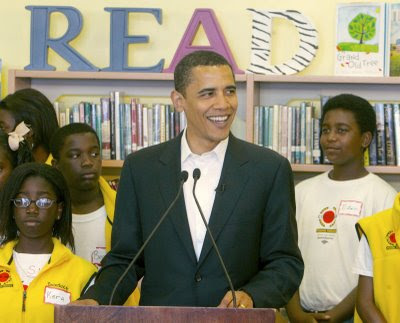
“Students are coming together to increase funding for traditionally underrepresented communities,” says Peoples.
With the keys legislative events to take place, the general sentiment in the field of education policy points towards undoing the harms of the recession.
“The Obama administration led the charge for education programs.” assures Packer, “They’re designed to go to states, colleges, school districts to prevent job losses, program cuts, and mitigate tuition increases.”
by Sidik Fofana
There was a time when quality of education depended only on the school teacher and his or her class room. This could have been pre Civil War. It could have been in the days of the colonies. It could have even been before Christ. It is also very possible that this school room model could just be some romantic notion, a utopian ideal based on no recorded system. The bottom line is that the fate of American education, particularly in urban areas, has long abandoned the days where it is just limited to the classroom.
Since the Bush Administration’s No Child Left Behind Act in 2001, which established national academic standards, the United States Congress in conjunction with the United States Department of Education has been trying to remedy the inequalities in schools across the country. The fact remains that American education, which operates mainly within the public sector, is based on school districts with varying financial endowments and different benchmarks for scholastic achievement and institutions with a significant population of minority students have perennially found themselves at the lower end of the spread.
By now the horror stories about inner city education have been quite ubiquitous. Students of color are attending crumbling schools. The achievement gap for between Blacks and White is alarmingly wide. African-Americans don’t have access to the quality of education that could get them in the nation’s top colleges. It is generally recognized that United States’ urban population, especially areas with a high concentration of minority students, suffer the most from this disparity. But acknowledging the inequalities in schools where the student body comprises mostly of children of color means, acknowledging the social factors—teacher quality, student economic background, education of parents, health care, school resources to name a few--that cause these inequalities. It is this end, determining the reasons behind these imbalances, that has fueled debates over the past few years.
One of the places in which this dialogue on education has reached full throttle is New York City. In the past couple of years, Mayor Michael Bloomberg has been working hard to follow the national trend of data driven evaluation of school districts which has been met with some resistance. In a New York Times article, in which Bloomberg announced that student test scores may factor in teacher tenure, many educators wrote back expressing their disapproval for proposed policy. One teacher, who found the proposal less than ideal, wrote, “There are many internal and external factors that influence each student’s learning that are beyond the teacher’s control. Factors related to economics, language, home environment, motivation, attitude and aptitude help inspire or discourage learning. It is not as simple as a test score.”Another teacher wrote, “When I taught the highest-performing class, my average reading score jumped about two years; when I taught the most challenging class, it moved about nine months. The effort was the same, but the results were very different. Should I have been granted or denied tenure?”
The United Federation of Teachers agrees with these positions as well. The New York City teacher’s union holds the belief that linking teacher tenure to test scores would prove stifling for those teachers who work in high needs environments. These are the very environments in which New York City traditionally has experienced personnel shortages. “One-third of new teachers leave teaching before ever coming up for tenure,” UFT president, Randi Weingarten, testified to City Council Education Committee. “Among those thousands we lose, there are a lot more people who could have been great teachers had we given them a little more encouragement and support. Rather than focus on how to keep good teachers, the school system is scaring them away.”
In 1990, Wendy Kopp, a senior at Princeton University’s Woodrow Wilson School of Public and International Affairs, founded Teach for America, a national non-profit organization which accepts recent graduates from competitive colleges and universities across the country for teaching positions in low-income districts. These young, uncertified teachers go through expedited training and fulfill a two-year requirement with the program. In 2000, New York City addressed its own teacher vacancies with the establishment of the New York City Teaching Fellows, which also recruits recent graduates as well as career changers to teach in the city’s most challenging districts.
Having bright, ambitious individuals teach in areas that many educators have either abandoned or are reluctant to relocate seems like a brilliant initiative on paper, but factor in the inexperience and high turnover rates (many matriculants in TFA and New York City Teaching Fellows leave teaching in less than five years) and many of the issues that these programs sought out to quell are left unresolved. Not only are these teachers dealing with a brand new profession, but they are dealing with scant resources, behavior problems, low skill levels, poor households, and other social ills that are beyond their power.
“Some of these students lack a lot of structure in their home life, and I don't think that teachers are the solution to every problem these kids face,” says Taylor Block, who was trained in the Teaching Fellows Program for three months before teaching in the Bronx. “Schools need to adopt better more consistent school wide disciplinary protocols and have more counselors on staff. It would also help to get the community and the parents involved, so the kids have plenty of support.”
The recession of the late 2000s has further complicated things. Instead of providing an influx of capital to underfunded schools, state budgets were forced to make cuts to their education departments. In 2008, Mayor Bloomberg oversaw a $180 million cut to New York City’s department of education, which resulted in school budgets being trimmed down by an average 1.75% or $70,000 per school.
Principals and teachers have felt the pangs of these reductions on several levels. Many after-school programs had to close their doors. Music and arts curricula have become burdensome vestiges. Schools across the country have had to increase their class sizes and lay off teachers. In 2007, the Title I program, America’s largest source of federal aid to low-income school districts received no additional funding for the 2008-2009 school year. Last year, Mayor Bloomberg enacted a hiring freeze on the Department of Education, restricting principals only to hiring within city’s “rubber room”, or Teacher Reassignment Center which houses pool of teachers awaiting hearing for either misconduct or incompetency. On May 27, 2009, Joel Klein, chancellor of the New York City public school announced $405 million more budget cuts for the 2010 school year.
As a result of reductions in funding, New York has been suffering from overcrowded schools more than ever. In the last few years, the city made national headlines with its project to address the problem by replacing large failing schools with smaller ones. Currently 42% of public and charter school buildings in New York house more one school. Though this measure has reduced student population, it has not reduced class size since, contractually, New York teachers can be assigned to as much as 34 students in one room.
“No one likes budget cuts, especially me, but these are tough times, and education makes up one third of the City’s budget,” say Joel Klein. “Our goal is to keep cuts away from classrooms as much as possible but we can’t find all the necessary savings outside of our schools.”
Bloomberg has recently proposed putting a one-year limit on the amount of time excessed teachers can remain on the payroll to stop the hemorrhaging $80 million a year the Department of Education spends paying teachers who aren’t teaching.
In addition to district movements, the Obama Administration has also been working hard on a national level to pump funding back into state budgets. The administration’s newest initiative is the Race to the Top Fund, which piggybacks off of No Child Left Behind and offers grants to states which show progress and innovation in education. “And the idea here is simple: Instead of rewarding failure, we only reward success. Instead of funding the status quo, we only invest in reform--,” President Obama remarked during January’s State of the Union address. “Reform that raises student achievement; inspires students to excel in math and science; and turns around failing schools that steal the future of too many young Americans, from rural communities to the inner city.”
The national competition, spearheaded by Secretary of Education, Arne Duncan, rewards qualifying states with 4.35 billion dollar incentive for the 2010-2011 school year. States must apply for limited grants and demonstrate success in four reform areas outlined under the American Recovery and Reinvestment Act of 2009, which include establishing college and career-ready standards, implementing data systems to plot student progress, making improvements in teacher effectiveness, and providing intensive support for the lowest-performing schools.
Proponents of the act like David Johns, Senior Policy Advisor to the US Senate and former educator, embrace the country’s shift toward data-driven evaluation. “Data is essential to being able to understand how instruction is impacting learning,” says Johns. “As a former teacher, every day I needed to have some tangible way of knowing what I was trying to convey to my students was being received.”
While Johns, who now works for the Senate Committee on Health, Education, Labor and Pensions under Senator Tom Harkin (D) from Iowa, helped draft and approve the ARRA and Race to the Top, he assures that policy makers have weighed the pros and cons of the government’s increased reliance on data. “There is no way to ignore the factors that contribute to why some students aren’t able to achieve as much as others,” he adds. “The challenge is balancing the practical realities that kids live in with the political realities.”
Race to the Top strict requirements also encourage the creation and nurturing of charter schools, which has found many states, adjusting its standards to gain eligibility. New York City, which caps its number of charter schools at 200, has considered lifting the quota to attain the federal funds, a move, which for now, remains a point of contention among district politicians.
“The creation of new charter schools is displacing public schools that are already firmly established in communities,” says Congresswoman Yvette Clarke who represents New York’s 11th Congressional District. “I believe that providing funding for school construction, as a companion to educational reforms, will be a necessary component to future educational reforms.”
Joel Packer, executive director for the Committee for Education Funding also makes it clear that although Race to the Top’s monetary boost presents a temporary solution, he eventually looks forward to programs which cater to the whole child. He cites organizations like the Harlem Children Zone in East Harlem, a pioneering non-profit organization which services low-income families through parenting workshops, parenting workshops, and health programs for its students as a successful model of community education.
“Children are facing these other realities and other needs,” Packer adds. “Yes we need we need to make kids have up-to-date access to textbooks and technology, but we also need to make sure that they’re healthy and safe and well fed.”
The United States Student Association, the largest student run organization in America, has taken solution models to another plateau, lobbying for more grant money for minority students in higher education. The organization, led by legislative director, Angela Peoples, recently helped organized a conference which took place in Washington, DC this March where students discussed major breakthroughs in funding for higher education like the Obama administration’s Student Aid Reform. The bill, which proposes taking away money that has traditionally gone to banks and lenders and issuing student loans straight from the federal budget, would save $87 million for the Pell Grant, a program which helps low income families pay for college. The USSA recently participated in a demonstration in March to augment the Grant’s endowment to 87 million.
“Students are coming together to increase funding for traditionally underrepresented communities,” says Peoples.
With the keys legislative events to take place, the general sentiment in the field of education policy points towards undoing the harms of the recession.
“The Obama administration led the charge for education programs.” assures Packer, “They’re designed to go to states, colleges, school districts to prevent job losses, program cuts, and mitigate tuition increases.”
Sunday, January 31, 2010
My Barack Obama Poem
somewhere in Harlem five years before the fact....
By Sidik Fofana
he gonna have a real African sounding last name
and his wife is gonna be smart but have a fatty too
and he gonna rock a fresh caesar
and his lips gonna toke every now and then
and he gonna love him some jay-z
and aretha gonna sing the national anthem
and he gonna install a ball court in that house...
i'm telling you, sun
it's gonna happen.
Sunday, November 22, 2009
The New Black Power by Jesse Washington
Jesse Washington is holding down the cultural political wing of the Associated Press all but singlehandedly. Here's his latest:

By JESSE WASHINGTON
The Associated Press
WASHINGTON — Ten months after Democrats took over the Capitol and the first African-American president moved into the White House, black lawmakers are in control of some of the most powerful positions in Congress — and face new challenges to using their long-sought influence.
There have been some victories — guaranteeing that stimulus money reaches some of the poorest parts of the country, expanding hate crimes legislation and moving to close health care disparities.
But "in some ways, our strategies haven't caught up with our own power," said Benjamin Todd Jealous, chief executive of the NAACP.
"The civil rights community is used to passing big omnibus legislative acts," he said. "We're not so accustomed to having the power to slice and dice that into 20 pieces and attach that to various other appropriations bills."
For generations, civil rights were inseparable from black politicians. That era ended with President Barack Obama, who has declined to engage in traditional black advocacy.
So any new efforts to help blacks who remain disproportionately unemployed, incarcerated, unhealthy and undereducated will most likely come from the 42 members of the Congressional Black Caucus.
"The goal is closing all of these gaps," said Rep. Barbara Lee, chairwoman of the caucus and a member of the House Appropriations Committee, which oversees budgetary spending. "When you look at all these huge systemic gaps, there's still not equality and justice for all."
But due to recent advances among blacks — Obama's election chief among them— there is a new resistance toward efforts aimed at helping black people specifically, said University of Pennsylvania history professor Mary Frances Berry.
"We're used to being supplicants at the table," Berry said. "Now they have to be smart. If they want to do something about unemployment, they can target those who have the highest rates. If you target education, target the lowest achievement rates. Don't say, 'We're doing this for black folks'; you say, 'We want to target where the problems are.'"
That strategy has been taking shape for some time, said Rep. James Clyburn, D-S.C., who as majority whip is the third-ranking member of the House.
Clyburn cited an amendment in the economic recovery package that he worked on with Rep. Charles Rangel, D-N.Y., chairman of the Ways and Means Committee, to ensure that 10 percent of federal stimulus dollars are spent in areas where at least 20 percent of residents have lived in poverty for the last 30 years.
"If I were designing a quote-unquote affirmative action program today, that's what I would be using, the 10-20-30 formula," Clyburn said. "We are finding more and more sophisticated ways of doing this on a nonracial basis."
But some still say the fractious black caucus — which famously split over endorsing Obama or Hillary Rodham Clinton in the 2008 presidential primaries — should be doing much more to bring together leaders from the private sector, education and local government to tackle problems facing black America.
"The black power establishment altogether should be given a B-minus or a C-plus," Berry said. "They need to pull together, join together and be smart about how they articulate what the goals and opportunities are."
Rep. John Conyers, D-Mich., chairman of the Judiciary Committee, said recently enacted legislation expanding hate crimes protection and changes he is pushing to mandatory minimum sentencing laws are evidence of "a whole new power syndrome on the national scene."
He also said he planned to bring a bill through his committee calling for the government to study the issue of reparations to descendants of slaves. "This is not just a feel-good measure," Conyers said. "This is very serious business."
Obama opposes reparations and has said "the best reparations we can provide are good schools in the inner city and jobs for people who are unemployed."
The caucus also played a major role in pushing the House to formally rebuke Rep. Jim Wilson, the South Carolina Republican who shouted "You lie!" during Obama's health care address to Congress.
"We weren't just going to let that go and not say something about it," said Rep. Yvette Clarke, D-N.Y.
She said Clyburn's position as majority whip was crucial to this and other caucus priorities: "We're able to sort of project and amplify our voices because he's in the leadership."
Clarke said that in bills such as the stimulus package, health care reform and auto industry bailouts, caucus members affect "the chemistry of the legislation" by ensuring that provisions to help minorities are included.
For example, the House health care bill provides billions of dollars to address the substandard health care many minorities receive. It's unclear whether the provisions will remain after negotiations to reconcile the Senate health care bills.
Berry, the Penn professor, said the caucus' effectiveness should ultimately be judged by results on problems in poverty, education, unemployment and other areas.
"We're going to find out how smart they are, how committed they are and whether they have a fix on what the people need," she said.

By JESSE WASHINGTON
The Associated Press
WASHINGTON — Ten months after Democrats took over the Capitol and the first African-American president moved into the White House, black lawmakers are in control of some of the most powerful positions in Congress — and face new challenges to using their long-sought influence.
There have been some victories — guaranteeing that stimulus money reaches some of the poorest parts of the country, expanding hate crimes legislation and moving to close health care disparities.
But "in some ways, our strategies haven't caught up with our own power," said Benjamin Todd Jealous, chief executive of the NAACP.
"The civil rights community is used to passing big omnibus legislative acts," he said. "We're not so accustomed to having the power to slice and dice that into 20 pieces and attach that to various other appropriations bills."
For generations, civil rights were inseparable from black politicians. That era ended with President Barack Obama, who has declined to engage in traditional black advocacy.
So any new efforts to help blacks who remain disproportionately unemployed, incarcerated, unhealthy and undereducated will most likely come from the 42 members of the Congressional Black Caucus.
"The goal is closing all of these gaps," said Rep. Barbara Lee, chairwoman of the caucus and a member of the House Appropriations Committee, which oversees budgetary spending. "When you look at all these huge systemic gaps, there's still not equality and justice for all."
But due to recent advances among blacks — Obama's election chief among them— there is a new resistance toward efforts aimed at helping black people specifically, said University of Pennsylvania history professor Mary Frances Berry.
"We're used to being supplicants at the table," Berry said. "Now they have to be smart. If they want to do something about unemployment, they can target those who have the highest rates. If you target education, target the lowest achievement rates. Don't say, 'We're doing this for black folks'; you say, 'We want to target where the problems are.'"
That strategy has been taking shape for some time, said Rep. James Clyburn, D-S.C., who as majority whip is the third-ranking member of the House.
Clyburn cited an amendment in the economic recovery package that he worked on with Rep. Charles Rangel, D-N.Y., chairman of the Ways and Means Committee, to ensure that 10 percent of federal stimulus dollars are spent in areas where at least 20 percent of residents have lived in poverty for the last 30 years.
"If I were designing a quote-unquote affirmative action program today, that's what I would be using, the 10-20-30 formula," Clyburn said. "We are finding more and more sophisticated ways of doing this on a nonracial basis."
But some still say the fractious black caucus — which famously split over endorsing Obama or Hillary Rodham Clinton in the 2008 presidential primaries — should be doing much more to bring together leaders from the private sector, education and local government to tackle problems facing black America.
"The black power establishment altogether should be given a B-minus or a C-plus," Berry said. "They need to pull together, join together and be smart about how they articulate what the goals and opportunities are."
Rep. John Conyers, D-Mich., chairman of the Judiciary Committee, said recently enacted legislation expanding hate crimes protection and changes he is pushing to mandatory minimum sentencing laws are evidence of "a whole new power syndrome on the national scene."
He also said he planned to bring a bill through his committee calling for the government to study the issue of reparations to descendants of slaves. "This is not just a feel-good measure," Conyers said. "This is very serious business."
Obama opposes reparations and has said "the best reparations we can provide are good schools in the inner city and jobs for people who are unemployed."
The caucus also played a major role in pushing the House to formally rebuke Rep. Jim Wilson, the South Carolina Republican who shouted "You lie!" during Obama's health care address to Congress.
"We weren't just going to let that go and not say something about it," said Rep. Yvette Clarke, D-N.Y.
She said Clyburn's position as majority whip was crucial to this and other caucus priorities: "We're able to sort of project and amplify our voices because he's in the leadership."
Clarke said that in bills such as the stimulus package, health care reform and auto industry bailouts, caucus members affect "the chemistry of the legislation" by ensuring that provisions to help minorities are included.
For example, the House health care bill provides billions of dollars to address the substandard health care many minorities receive. It's unclear whether the provisions will remain after negotiations to reconcile the Senate health care bills.
Berry, the Penn professor, said the caucus' effectiveness should ultimately be judged by results on problems in poverty, education, unemployment and other areas.
"We're going to find out how smart they are, how committed they are and whether they have a fix on what the people need," she said.
Wednesday, August 26, 2009
R.I.P. Ted Kennedy
You don't even have to be from Boston or be familiar with the sordid but legendary legacy of the Kennedy family, to think of the great vault of sound political work that his name evokes. Barack Obama called the 77 year old senator who died yesterday "a singular figure," and I consider it to be one of the least arguable statements in a while. I remember on TV when he was at Obama's inaugural having a seizure, but insisted that attention be directed away from him. What a remarkable life lived.

Sunday, July 12, 2009
Obamadonk...

You've all seen it by now. President allegedly caught looking at 17 Brazilian Junior Delegate, Mayara Tavares. This is ridiculous! A small plebian like Sidik Fofana "onces over" a girl and the world goes on quietly humming, but the president of the United States does it and all of sudden it's world news and a million roundtables form. Oh yeah, by the way, it turns out he wasn't looking at the girl's assets but even if he was? C'mon, we already know Obama is a butt man (see Michelle Obama and the unofficial yet confirmed statistic that most heterosexual men are as well), so please the rest the scrutinizing eye. The sad thing is this is not the end of the 24-hour Obamascope. Stay tuned for more crazy people taking pictures of Obama eating Popeye's fried chicken and doing the Superman. Leave my president alone!
Subscribe to:
Posts (Atom)